
The historical trajectory of the Qatar Peninsula represents a sophisticated interplay of environmental adaptation, tribal maneuverability, and strategic economic pivots. Positioned as a limestone protrusion into the Persian Gulf, the region has transitioned from a prehistoric maritime crossroads and a center for the ancient dye industry into a modern global energy hub and a pivotal diplomatic mediator. This report analyzes the continuous human habitation of the peninsula over 50,000 years, tracing its evolution through the Islamic caliphates, the emergence of the Al Thani dynasty, the complexities of the British protectorate, and the modern era of liquefied natural gas (LNG) dominance and strategic autonomy.
- Prehistoric Foundations and the Antiquity of Maritime Exchange
- Neolithic Developments and the Ubaid Influence
- The Bronze Age and the Specialty Dye Industry
- Classical Antiquity: From Seleucid Influence to Sasanian Commerce
- Islamic Transformation and the Medieval Prosperity
- The Emergence of the Al Thani Dynasty and Tribal Suzerainty
- The 1868 Treaty: A Foundational Act of Sovereignty
- Sheikh Jassim bin Mohammed and the Ottoman Presence
- The British Protectorate and the Oil Frontier (1916–1971)
- Independence and the Birth of a Modern State (1971)
- The Hamad Era: The Catalyst for Strategic Autonomy (1995–2013)
- Soft Power and Instruments of Global Clout
- The 2017 Blockade: Crisis, Resilience, and the Path to Al-Ula
- Governance, Constitutionalism, and Labor Reform
- Qatar National Vision 2030 and the Future of the State
- Conclusion: A Peninsula of Strategic Resilience
Prehistoric Foundations and the Antiquity of Maritime Exchange
Human habitation in Qatar is not a recent phenomenon but a narrative of survival in an arid environment that dates to the Paleolithic Age. Archaeological evidence confirms that humans were present on the peninsula as early as 50,000 years ago, utilizing flint tools and scrapers found in sites across the central plateau. These early nomadic groups were dictated by the availability of water, a constraint that remains central to the Qatari narrative today.
Neolithic Developments and the Ubaid Influence
The Neolithic period (8000–3800 BC) saw a more structured interaction with neighboring civilizations. Significant discoveries of Mesopotamian artifacts from the Ubaid period (c. 6500–3800 BC) have been unearthed in abandoned coastal settlements, most notably at Al Da’asa on the western coast. This site, believed to have served as a seasonal encampment, contains decorated pottery and stone tools that signify an early integration into a burgeoning maritime trade network that linked the northern and southern Gulf. Some historians have even theorized that the Sumerians themselves may have originated from this region, underscoring the peninsula’s role as a primary site for early Gulf culture.
The Bronze Age and the Specialty Dye Industry
During the second millennium BC, the peninsula became a site of specialized industrial production. Excavations on the Al Khor Islands have revealed Kassite Babylonian material, including crushed snail shells and potsherds, which attest to an active trade relationship between Qatari inhabitants and the Kassites in modern-day Bahrain. These findings suggest that Qatar was the site of the world’s earliest known shellfish dye industry. The extraction of purple dye from marine snails was a high-value economic activity that connected the peninsula to the elite markets of Mesopotamia and beyond.
Classical Antiquity: From Seleucid Influence to Sasanian Commerce
The classical era brought Qatar into the Greco-Roman geographical record. Around 325 BC, Alexander the Great dispatched Admiral Androsthenes of Thasos to survey the Persian Gulf coast. Following Alexander’s death, the Seleucid Empire expanded eastward, and archaeological evidence, such as potsherds found north of Dukhan and a cairnfield of 100 burial mounds at Ras Abrouq, confirms a significant Greek-influenced seafaring community.
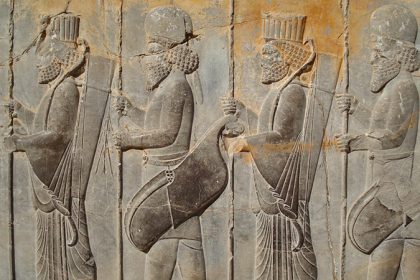
By the mid-first century AD, Roman author Pliny the Elder referred to the inhabitants as the “Catharrei,” describing them as nomadic tribes roaming in search of water and sustenance. Ptolemy’s second-century map later depicted the landmass as “Catura,” marking its formal recognition in western cartography. The subsequent Sasanian Empire (224–642 AD) integrated Qatar into its commercial sphere, where the peninsula contributed two primary commodities: precious pearls and purple dye. This era also saw the dispersal of Christianity; the region known as “Beth Qatraye” (Syriac for “house of the Qataris”) became a center for Mesapotamian Christians, with monasteries and settlements established across the peninsula and nearby islands.
| Historical Period | Key Archaeological Sites | Major Economic Activity |
| Paleolithic Age | Central Plateau | Nomadic hunting and flint tool fabrication |
| Neolithic (Ubaid) | Al Da’asa | Seasonal fishing and trade with Mesopotamia |
| Bronze Age (Kassite) | Al Khor Islands | Purple dye production from shellfish |
| Hellenistic Period | Ras Abrouq, Zekreet | Sea-faring and maritime surveying |
| Sasanian Empire | Mezru’ah, Umm al-Ma’a | Pearl diving and glass manufacturing |
Islamic Transformation and the Medieval Prosperity
The 7th century marked a definitive religious and political shift. In 628 AD, the Prophet Muhammad sent an envoy to Munzir ibn Sawa Al-Tamimi, the ruler of eastern Arabia, who embraced Islam and transitioned the peninsula into the Islamic realm. This conversion was not merely spiritual but also strategic, as Qatar’s naval fleet was subsequently mobilized to transport Islamic armies under leaders like Abu al-Al’a al-Hadrami.
The Umayyad and Abbasid Golden Ages
Under the Umayyad Caliphate (661–750 AD), Qatar emerged as a renowned center for breeding camels and horses, animals essential for both military and commercial pursuits in the Arabian interior. The subsequent Abbasid period (750–1253 AD) saw the peninsula benefit from its strategic location on the trade routes between Basra and the Indian Ocean. Vessels traveling to India and China frequently stopped in Qatari ports to trade pearls.
Archaeological remains from the 9th century, particularly at Murwab, reveal a level of architectural sophistication and wealth previously undocumented. The site contains over 250 stone-built houses, two mosques, and an Abbasid fort. Artifacts such as Thai pottery and West African coins found at these sites demonstrate the extensive reach of the medieval Qatari maritime network. However, as the prosperity of the Abbasid Caliphate in Baghdad declined, so too did the economic fortunes of the peninsula, leading to a period of relative isolation and the re-emergence of nomadic dominance.
The Emergence of the Al Thani Dynasty and Tribal Suzerainty
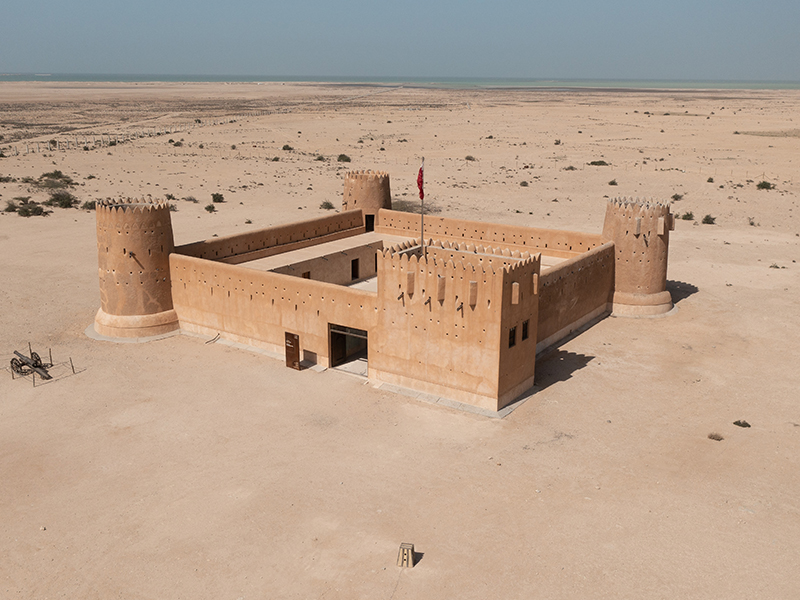
The modern history of Qatar begins conventionally in 1766 with the migration of families from Kuwait to the peninsula. The Al Khalifah family settled in the town of Al-Zubārah, which rapidly transformed into a major center for trade and pearl diving. While the Al Khalifah eventually conquered Bahrain in 1783 and established their ruling seat there, they maintained a persistent claim to Al-Zubārah and other parts of the Qatari mainland, a source of tension that would last for over a century.
The 1868 Treaty: A Foundational Act of Sovereignty
The rise of the Al Thani family (Āl Thānī), members of the Tamīm tribe who had migrated from central Arabia, provided a local counter-weight to external claims. A major confrontation occurred in 1867 when a dispute between the Bahraini Al Khalifah and Qatari residents led to the near-total destruction of Doha. Until this point, Britain had viewed Qatar as a dependency of Bahrain. However, the violence prompted British Political Resident Lewis Pelly to intervene.
In 1868, Britain signed a separate treaty with Mohammed ibn Thani, the Sheikh of Doha. This agreement was pivotal because it gave Britain a direct signatory in Qatar, effectively recognizing it as an independent political entity separate from Bahrain. While the Al Thani were initially just one of several prominent families, this treaty set them on the path to becoming the peninsula’s undisputed rulers.
Sheikh Jassim bin Mohammed and the Ottoman Presence
Sheikh Jassim bin Mohammed Al Thani, who succeeded his father and is considered the founder of modern Qatar, navigated a complex geopolitical landscape between the British and the Ottoman Empire. In 1871, at the invitation of the ruler’s son, Ottoman forces occupied Qatar as part of their effort to secure the Al-Hasa province. Sheikh Jassim accepted the title of kaymakam (governor) from the Ottomans but fiercely resisted their attempts to centralize administration and increase taxes.
This tension culminated in the Battle of Al-Wajbah in 1893. When the Ottoman governor attempted to arrest Sheikh Jassim over administrative disputes, Qatari forces defeated the Ottoman troops, securing a degree of internal autonomy that remained until the final Ottoman withdrawal in 1913. This victory solidified Jassim’s status as a national leader and champion of Qatari independence.
| Key 19th-Century Milestone | Date | Significance |
| Al Khalifah Migration | 1766 | Establishment of Al-Zubārah as a trade hub |
| Bahraini Conquest | 1783 | Al Khalifah move to Bahrain; mainland claims persist |
| Destruction of Doha | 1867 | Escalation of Bahraini-Qatari tensions |
| Anglo-Qatari Treaty | 1868 | Formal British recognition of the Thani dynasty |
| Battle of Al-Wajbah | 1893 | Qatari victory over Ottomans; internal autonomy secured |
The British Protectorate and the Oil Frontier (1916–1971)
Following the departure of the Ottomans during World War I, Britain moved to formalize its influence. In 1916, Sheikh Abdullah bin Jassim Al Thani signed a treaty with Britain that resembled the “Trucial” agreements with other Gulf states. Under this arrangement, Britain assumed control over Qatar’s foreign relations and provided protection from maritime aggression.
Negotiating Protection and Sovereignty
Sheikh Abdullah was a shrewd negotiator, registering his reservations about articles that he felt encroached on national sovereignty, such as the appointment of a British political resident and the establishment of a British post office. These reservations delayed the actual physical presence of a British official in Doha until 1949. In 1935, the treaty was renewed and amended to allow for the development of airports and communication facilities, further integrating Qatar into the British imperial security network.
The Collapse of Pearling and the Dukhan Strike
The 1930s was a decade of profound economic distress. The development of Japanese cultured pearls and the global depression effectively ended the natural pearl trade, which had been the mainstay of the Qatari economy for centuries. This period, known as the “Decade of Hardship,” was marked by food shortages and a sharp decline in revenues.
The economic salvation of the state arrived with the discovery of oil. After a 1935 concession agreement with the Iraq Petroleum Company, oil was first struck at the Dukhan field in late 1939. However, the onset of World War II halted all operations for four years. It was not until 1949 that oil began to flow on a commercial scale, with the first consignment departing Qatar’s shores in December of that year. The subsequent rise in revenues transformed the state’s capacity, prompting the British to intervene in the 1949 succession to ensure a stable administration for the burgeoning petroleum industry.
Independence and the Birth of a Modern State (1971)
The British announcement in 1968 that it would withdraw from the Gulf forced Qatar and its neighbors to reconsider their political futures. Negotiations for a federation between Qatar, Bahrain, and the seven emirates of the Trucial States ultimately failed due to disagreements over representation and the distribution of power. Consequently, Qatar declared its independence on September 3, 1971.
The 1972 Coup and the Infrastructure Boom
Shortly after independence, Sheikh Khalifa bin Hamad Al Thani deposed his cousin, Sheikh Ahmad ibn Ali, in a 1972 palace coup supported by the ruling family. Sheikh Khalifa sought to modernize the state’s administrative structure and oversee the boom in oil production. He established the first Council of Ministers and focused on economic diversification, expanding the agricultural sector and building fertilizer plants. Under his leadership, Doha was transformed from a “sleepy pearling village” into a modern capital with world-class infrastructure, high-rise buildings, and a deepwater port.
The Hamad Era: The Catalyst for Strategic Autonomy (1995–2013)
The most significant turning point in Qatar’s contemporary history occurred on June 27, 1995, when Crown Prince Hamad bin Khalifa Al Thani seized power from his father in a bloodless palace coup. This was not merely a transition of personnel but a fundamental reorientation of the Qatari state. Sheikh Hamad and his advisors sought to break away from being a “subordinate” of larger neighbors, specifically Saudi Arabia, and aimed to carve out an independent path in foreign and economic policy.
The 1996 Counter-Coup Attempt: Operation Abu Ali
The new Emir’s independent streak was immediately challenged. In February 1996, a counter-coup was attempted under the leadership of former Economy Minister Hamad bin Jassim bin Hamad Al Thani, the Emir’s cousin. Dubbed “Operation Abu Ali,” the plot aimed to restore Sheikh Khalifa to power. Subsequent investigations and documentaries, including interviews with former French Army commander Paul Barril, revealed that the operation was backed by Saudi Arabia, the UAE, Bahrain, and Egypt.
The plot involved recruiting mercenaries, stored weapons in Abu Dhabi’s InterContinental hotel, and plans to use 3,000 Chadian soldiers. The coup failed when it was discovered by Qatari intelligence, and French President Jacques Chirac reportedly personally intervened to order Paul Barril to stop the operation. The aftermath saw the conviction of 33 plotters to life sentences and significantly hardened Qatar’s resolve to secure its sovereignty through non-traditional means.
The LNG Revolution and the North Field
The primary engine of Qatar’s newfound influence was the exploitation of the North Field. Although discovered in 1971, the field’s status as the world’s largest non-associated natural gas reservoir was only confirmed after 14 years of appraisal. Sheikh Hamad moved focus away from oil toward a massive expansion of the liquefied natural gas (LNG) industry.
By investing in liquefaction “trains” and a specialized fleet of carriers, Qatar transformed itself into the world’s leading LNG exporter by 2006. This shift provided Qatar with a degree of “insulation” from the volatile global oil market and made the state an indispensable energy partner for both European and Asian economies.
| Natural Gas Expansion Phase | Capacity Goal (mtpa) | Timeline |
| Pre-2024 Base | 77 | Established Capacity |
| North Field East (NFE) | +32 | Online 2026-2027 |
| North Field South (NFS) | +16 | Online 2027-2028 |
| North Field West (NFW) | +17 | Online 2029-2030 |
| Total 2030 Aspiration | 142 | 85% Increase from 2024 |
Soft Power and Instruments of Global Clout
Sheikh Hamad’s vision for an independent Qatar relied heavily on soft power and global visibility. In 1996, he founded the Al Jazeera Media Network, the first news channel in the Arab world to operate with relative independence from state-controlled narratives. Al Jazeera challenged authoritarian governments across the region and provided a platform for diverse political viewpoints, including those of regional dissidents. While the network garnered international acclaim for its coverage of the Arab Spring, it also became a major point of contention with neighboring regimes, who viewed it as a tool of Qatari propaganda.
The Doctrine of Mediation
Parallel to Al Jazeera, Qatar established itself as a “trusted mediator” in regional disputes. By maintaining cordial ties with groups as diverse as the Taliban, Hamas, the Muslim Brotherhood, and Western governments, Doha hosted critical negotiations for conflicts in Lebanon, Sudan, and Afghanistan. This policy of “strategic balancing” was designed to ensure that Qatar remained a necessary actor for all regional powers, thereby discouraging external aggression.
Educational and Cultural Renaissance
Under the patronage of Sheikha Moza bint Nasser, Qatar launched a series of high-profile educational and cultural initiatives. The Qatar Foundation for Education, Science and Community Development, established in 1995, created Education City—a hub hosting branch campuses of world-renowned universities. This initiative aimed to transform Qatar into a knowledge-based economy and provide the domestic population with elite educational opportunities.
In the cultural sphere, the 2008 opening of the Museum of Islamic Art, designed by I.M. Pei, signaled Qatar’s ambition to become the cultural capital of the Middle East. The museum’s architecture, which abstracts Islamic design principles like symmetry and light, serves as a “deliberate statement about identity” and global cultural dialogue.
The 2017 Blockade: Crisis, Resilience, and the Path to Al-Ula
The most significant threat to the Qatari state since the 1996 coup attempt began on June 5, 2017. Saudi Arabia, the UAE, Bahrain, and Egypt severed diplomatic ties and imposed a comprehensive land, sea, and air blockade. The “Quartet” accused Qatar of supporting terrorism and violating a 2014 GCC agreement. They presented 13 demands, including the closure of Al Jazeera and the severance of ties with Iran—demands that Qatar rejected as a violation of its sovereignty.
Economic Transformation and Food Security
The blockade had the unintended effect of accelerating Qatari self-sufficiency. Forced to find alternatives to the Saudi land border, Qatar expanded its Hamad Port and established new trade routes with Turkey and Iran. The state’s focus on food security led to the rapid development of domestic industries, most notably the Baladna dairy farm, which allowed Qatar to go from being dependent on Saudi milk to becoming largely self-sufficient in dairy products within months.
Resolution at Al-Ula
The crisis was resolved in January 2021 with the signing of the Al-Ula Declaration during the 41st GCC Summit. Brokered by Kuwait and the United States, the agreement restored diplomatic and trade relations without Qatar agreeing to the original 13 demands. Analysts note that the blockade ultimately failed to weaken Qatar; instead, the nation emerged “economically and militarily stronger” and more autonomous than it was before the crisis.
Governance, Constitutionalism, and Labor Reform
As Qatar’s global profile grew, so too did the demand for internal reform. In April 2003, a referendum was held on Qatar’s first Permanent Constitution, which was approved by nearly 97% of voters. The constitution, promulgated in 2004, guaranteed freedom of expression, worship, and assembly, and established an elected Shura Council with legislative authority.
Dismantling the Kafala System
The most scrutinized aspect of Qatari domestic policy has been the treatment of migrant workers. In the lead-up to the 2022 FIFA World Cup, Qatar introduced the most significant labor reforms in the Gulf region. Between 2018 and 2020, the state effectively dismantled the kafala (sponsorship) system by:
- Abolishing Exit Permits: Migrant workers no longer require employer approval to leave the country.
- Eliminating NOCs: The requirement for a “No Objection Certificate” to change jobs was removed, allowing for greater labor mobility.
- Implementing a Minimum Wage: Qatar became the first country in the region to adopt a non-discriminatory minimum wage applying to all nationalities and sectors.
These reforms were accompanied by the establishment of the Wage Protection System (WPS), which monitors bank transfers to ensure workers are paid correctly and on time.
| Labor Reform Statistic | Pre-2018 Status | 2020-2022 Performance |
| Job Mobility Applications | ~18,000 (2019) | 348,450 Approved |
| Minimum Wage Level | No uniform floor | QAR 1,000 + housing/food |
| Impacted Workers | N/A | 280,000 (13% of workforce) saw raises |
| Compliance (WPS) | N/A | 94% of private companies complying |
| Visa Centers (QVCs) | 0 | 14 centers in source countries |
Qatar National Vision 2030 and the Future of the State
The overarching framework for Qatar’s future development is the Qatar National Vision (QNV) 2030, launched in 2008. The vision aims to transform the country into an advanced society capable of sustainable development through four central pillars: human, social, economic, and environmental development.
The Third National Development Strategy (2024–2030)
As the state enters the final phase of the 2030 vision, it has unveiled the Third National Development Strategy (NDS3). This strategy targets a transition toward a sustainable economic future driven by the private sector and innovation. Key goals include:
- Sustainable Growth: Accelerating economic growth to 4% annually by expanding gas production and creating specialized economic clusters.
- Financial Sustainability: Increasing the contribution of non-oil sectors to government revenue and maintaining healthy debt levels.
- Future-Ready Workforce: Raising the percentage of skilled workers to 46% and employing more than 20% of the Qatari workforce in the private sector.
The NDS3 also emphasizes environmental sustainability, with a target to reduce greenhouse gas emissions by 25% through optimized electricity and water consumption and the expansion of renewable energy projects like the Al Kharsaah solar plant.
Conclusion: A Peninsula of Strategic Resilience
The history of Qatar is defined by a remarkable ability to adapt to changing circumstances—from the collapse of the pearling industry to the pressures of regional blockades. The state has consistently utilized its natural resources not merely for consumption, but as a strategic tool for securing national sovereignty and global relevance. By balancing modernization with the preservation of its Arab-Islamic heritage, and by positioning itself as a vital energy supplier and a diplomatic node, Qatar has managed to overcome the geographical constraints of a small peninsula. As it moves toward 2030, the nation’s focus on human development, economic diversification, and institutional reform suggests a continued commitment to the path of strategic autonomy established by the Al Thani dynasty over the last 150 years.