
📍 Key Information
- Official Name: Republic of Korea (Daehan Minguk)
- Capital: Seoul
- Largest City: Seoul (The Seoul Capital Area houses half of the country’s population)
- Area: 100,210 km²
- Population: ≈ 51.7 million (2024 estimate)
- Official Language: Korean (Hangul script)
- Currency: South Korean Won (KRW)
- Time Zone: Korea Standard Time (UTC +9)
- Political System: Unitary presidential constitutional republic
- Founded: August 15, 1948
📜 History
- Ancient kingdoms of Goguryeo, Baekje, and Silla (Three Kingdoms period).
- Joseon Dynasty (1392–1897): Longest-running Confucian dynasty; creation of the Hangul alphabet.
- Japanese colonial rule (1910–1945).
- Korean War (1950–1953): Resulted in the division of the peninsula.
- Miracle on the Han River: Rapid industrialization and democratization from the 1960s to the 1990s.
🗺️ Geography
- Southern half of the Korean Peninsula, surrounded by the Yellow Sea and the Sea of Japan.
- Topography: Predominantly mountainous (70% of the land), with coastal plains in the west and south.
- Over 3,000 small islands, the largest being Jeju Island.
- Humid continental and subtropical climate with four very distinct seasons.
👥 People & Society
- Highly homogeneous society; ethnic Koreans make up the vast majority.
- World’s lowest fertility rate; rapidly aging population.
- Religion: Significant Christian and Buddhist populations; many identify as irreligious while following Confucian social ethics.
- Education is highly valued and extremely competitive (the “Education Fever”).
🎭 Culture & Heritage
- Hallyu (The Korean Wave): Global explosion of K-Pop, K-Dramas, and cinema (e.g., Parasite, Squid Game).
- Traditional heritage: Hanbok (dress), Hanok (architecture), and Pansori (musical storytelling).
- Cuisine: Based on rice, vegetables, and meats; famous for Kimchi (fermented vegetables), Bibimbap, and Korean BBQ.
- Deeply ingrained social hierarchy based on age and status.
💼 Economy
- High-tech industrialized economy; member of the G20 and OECD.
- Global leader in semiconductors, smartphones, automobiles, and shipbuilding.
- Home to massive family-owned conglomerates known as Chaebols (Samsung, Hyundai, LG, SK).
- One of the world’s most innovative nations with the highest R&D intensity.
✨ Highlights
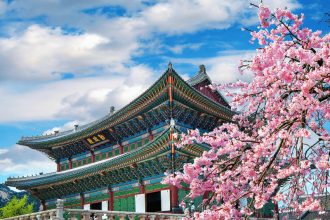
- Gyeongbokgung Palace: The grandest of the five royal palaces in Seoul.
- Bukchon Hanok Village: Traditional wooden houses in the heart of the city.
- DMZ (Demilitarized Zone): The world’s most heavily fortified border.
- Jeju Island: Volcanic landscapes, “Hallasan” mountain, and unique lava tubes.
- Busan: Major port city known for its beaches and the colorful Gamcheon Culture Village.
🧳 Tourism & Experiences
- 24-hour city life and vibrant night markets.
- Templestay programs: Living with monks to experience Buddhist life.
- Modern futuristic architecture mixed with ancient shrines.
- Advanced beauty and skincare tourism (K-Beauty).
🧭 Traveler Essentials
- Entry & Visas: K-ETA (Electronic Travel Authorization) or Visa required for most; very streamlined process.
- Currency & Payments: KRW; highly digitized, credit cards accepted almost everywhere.
- Connectivity: World’s fastest average internet speeds; public Wi-Fi is ubiquitous.
- Transport: Excellent KTX high-speed rail and an incredibly efficient Seoul Metro system.
- Health & Safety: Top-tier medical facilities; one of the safest countries in the world for travelers.
- Language: English taught in schools; signs are bilingual, but translation apps help in rural areas.
📊 Summary Data
| Indicator | Value |
| Area | 100,210 km² |
| Population | ≈ 51.7 million |
| Capital | Seoul |
| Currency | KRW |
| Time Zone | UTC +9 |
| Literacy Rate | ≈ 99% |
| HDI | ≈ 0.929 (Very High) |
| Main Exports | Semiconductors, Cars, Ships, Petrochemicals |