
The geographical expanse currently defined as the Islamic Republic of Pakistan represents a unique historical phenomenon where one of the world’s oldest cradles of civilization intersects with a modern state founded on the principles of ideological nationalism. This region has served as a pivotal corridor for human migration, imperial expansion, and spiritual transformation for over five millennia, acting as the primary link between the Indian subcontinent and the broader Eurasian landmass. The history of Pakistan is not a mere chronology of the post-colonial era starting in 1947; it is an enduring narrative of sophisticated urbanism, successive Islamic sultanates, and a persistent struggle for constitutional identity that continues to evolve through the transformative legal and economic shifts of 2025.
- The Primordial Foundations: Prehistoric Hominids and the Neolithic Revolution
- The Indus Valley Civilization: The Zenith of Ancient Urbanism
- The Classical Era: Persian Satrapies, Hellenism, and the Gandhara Renaissance
- The Advent of Islam: From Muhammad bin Qasim to the Sultanates
- The Mughal Empire: The Zenith of Indo-Persian Civilization
- The British Raj and the Genesis of Muslim Nationalism
- The Crucible of 1947: Independence, Partition, and Catastrophe
- The Era of Military Dominance and the Secession of East Pakistan
- The Socialist Experiment and the Sharia Pivot: Bhutto and Zia
- The Decade of Managed Democracy and the 1998 Nuclear Tests
- The War on Terror and the Democratic Transition (1999-2023)
- The 2024-2025 Landscape: Constitutional Restructuring and Security Volatility
- Synthesis: Geopolitical Hedging and Future Outlook
The Primordial Foundations: Prehistoric Hominids and the Neolithic Revolution
The deep history of Pakistan begins in the Soan Valley and the Potohar Plateau, where archaeological evidence indicates human activity dating back approximately two million years. These early hominids utilized stone tools, the discovery of which proves that the region was a viable habitat for prehistoric man during the Lower Palaeolithic era. This primordial presence established the region as a persistent site for human habitation, leading eventually to the Neolithic revolution at Mehrgarh in Balochistan around 7000 BCE.
Mehrgarh represents the earliest known farming community in South Asia, predating the Indus Valley Civilization by several millennia. The site provides critical insights into the transition from semi-nomadic life to settled agriculture, with evidence of wheat and barley cultivation, the domestication of cattle, sheep, and goats, and early forms of pottery and dental surgery. The abandonment of Mehrgarh around 2600 BCE coincided with a climatic shift toward aridity, prompting a migration toward the fertile Indus plains, which laid the groundwork for the emergence of the world’s most advanced Bronze Age culture.
The Indus Valley Civilization: The Zenith of Ancient Urbanism
Between 3300 and 1700 BCE, the Indus Valley Civilization (IVC), also known as the Harappan Civilization, reached a level of sophistication in urban planning and civic administration that would not be replicated for nearly two thousand years. Spanning approximately 1.25 million square kilometers across present-day Sindh, Punjab, and Balochistan, the IVC was anchored by the metropolitan centers of Mohenjo-Daro and Harappa. These cities were characterized by their grid-patterned streets, multi-story baked-brick houses, and elaborate drainage systems that included covered sewers and private baths—innovations that mirrored 20th-century urban standards.
The socio-economic vitality of the IVC was supported by a standardized system of weights and measures, which facilitated extensive trade networks with Mesopotamia and the Near East. The discovery of ancient bricks during the 1856 construction of the Lahore-Karachi railway highlights the scale of the civilization; unaware of their historical significance, British colonial laborers utilized hundreds of thousands of these millennia-old bricks as track ballast. The eventual decline of the IVC around 1700 BCE is attributed to a combination of factors, including tectonic shifts affecting the Ghaggar-Hakra river system, increasing desiccation, and potential migrations from Central Asia.
| Era of Ancient Pakistan | Timeframe | Key Developments and Cultural Markers |
| Soan Valley Hominids | ~2 million years ago | Early stone tools; hunter-gatherer existence. |
| Mehrgarh Neolithic | 7000 – 2600 BCE | Transition to agriculture; early dentistry and pottery. |
| Kot Diji Culture | 3500 – 3000 BCE | Pre-Harappan urban phase; fortified settlements. |
| Mature Indus Valley | 2600 – 1900 BCE | Urban planning; brick architecture; global trade. |
| Late Harappan Phase | 1900 – 1300 BCE | Urban decay; migration toward eastern plains. |
The Classical Era: Persian Satrapies, Hellenism, and the Gandhara Renaissance
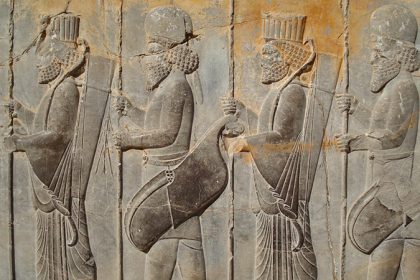
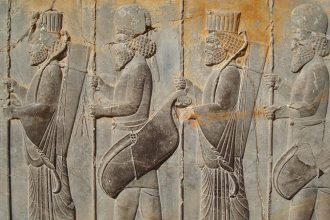
Following the Indus collapse, the region entered the Vedic period (~1500–500 BCE), during which the earliest hymns of the Rigveda were composed in the Punjab. This era of tribal principalities eventually gave way to external imperial consolidation. In the 6th century BCE, the Achaemenid Empire of Persia annexed the Indus Valley, incorporating northern Pakistan as the easternmost province of their vast domain. Persian rule introduced centralized bureaucratic administration and linked the region to the economic circuits of the Middle East, a connection that remains central to Pakistan’s modern geopolitical identity.
The arrival of Alexander the Great in 327 BCE marked a brief but culturally explosive encounter between Greece and the Indus. Alexander’s victory over King Porus at the Battle of the Hydaspes near the Jhelum River opened the region to Hellenistic influences, which would later coalesce in the Gandhara civilization. Taxila, a major center of learning, became a nexus where Greek philosophy met Indian spiritualism.
Under the Maurya Empire (321–185 BCE), particularly the reign of Emperor Ashoka, Buddhism flourished across the region. Ashoka’s conversion led to the construction of thousands of stupas, transforming Gandhara into a spiritual heartland for the faith. This legacy reached its artistic zenith under the Kushan Empire (1st–3rd Century CE), where the “Gandhara School of Art” created the first human icons of the Buddha, blending Greek aesthetic standards with Buddhist iconography. The Silk Road trade during the Kushan era further solidified northern Pakistan as a global conduit for commerce and cultural exchange.
| Ancient Dynasties | Approximate Period | Regional Impact and Legacy |
| Achaemenid Empire | 518 – 330 BCE | Administrative satrapies; integration with Persia. |
| Macedonian Greeks | 327 – 325 BCE | Hellenistic cultural fusion; military outposts. |
| Mauryan Empire | 321 – 185 BCE | Buddhist missionary activity under Ashoka. |
| Kushan Empire | 1st – 3rd Century CE | Silk Road prosperity; Gandhara Buddhist art. |
| Gupta Empire | 320 – 550 CE | Hindu cultural revival; limited direct control. |
| White Huns | 5th – 6th Century CE | Destruction of Buddhist sites; decline of Gandhara. |
The Advent of Islam: From Muhammad bin Qasim to the Sultanates
The modern identity of Pakistan as a predominantly Muslim nation traces its political origin to the early 8th century. In 711 CE, the Umayyad general Muhammad bin Qasim arrived in Sindh at the age of 17, leading an expedition to address the piracy of Arab merchant ships near the port of Debal. Qasim’s victory over Raja Dahir and the subsequent capture of the capital at Aror marked the first successful Islamic conquest of South Asian soil.
The Arab administration of Sindh was notable for its relative tolerance; local Hindus and Buddhists were granted “protected” status, and the indigenous population was made aware of their legal rights under the new social order. Qasim established the first mosques and administrative settlements, earning the region the title “Bab-ul-Islam” or the Gateway of Islam. This foundational period saw the emergence of a syncretic culture, where Islamic traditions began to interface with local customs, eventually leading to a large-scale conversion process fostered by both political stability and the arrival of Sufi saints.
Following the decline of Arab rule, the 11th and 12th centuries witnessed the expansion of Turkic and Afghan powers. Mahmud of Ghazni’s campaigns facilitated mass conversions and the integration of the Punjab into the Ghaznavid Empire. This culminated in the establishment of the Delhi Sultanate in 1206 CE, a period spanning several dynasties that consolidated Muslim rule across the region.
| Delhi Sultanate Dynasties | Reign Period | Notable Contributions to Pakistan Region |
| Mamluk (Slave) Dynasty | 1206 – 1290 | Foundation of the Sultanate; defense against Mongols. |
| Khalji Dynasty | 1290 – 1320 | Economic reforms; suppression of Mongol invasions. |
| Tughlaq Dynasty | 1320 – 1414 | Administrative expansion; urban development in Punjab. |
| Saiyid Dynasty | 1414 – 1451 | Period of political transition and local autonomy. |
| Lodhi Dynasty | 1451 – 1526 | Consolidation of Afghan influence; fall to Babur. |
The Sultanate era was defined by the arrival of influential Sufi orders, such as the Chishtis and Suhrawardis, who made cities like Multan and Lahore centers of spiritual and intellectual life. This period also saw the development of the Urdu language, a linguistic synthesis of Persian, Arabic, and Turkic elements with local Prakrits, which would later become a central symbol of Muslim national identity.
The Mughal Empire: The Zenith of Indo-Persian Civilization
In 1526, Zahiruddin Muhammad Babur, a descendant of Timur and Genghis Khan, defeated the last Lodhi Sultan at the Battle of Panipat, ushering in the Mughal era. The Mughals presided over a three-century renaissance in art, architecture, and administration, transforming the territories of present-day Pakistan into the cultural heart of their empire.
Under Akbar the Great, the empire adopted policies of religious pluralism and land reforms that integrated the diverse populace into a cohesive imperial structure. However, the physical legacy of the Mughals is most visible in the grand monuments of the 17th century. Emperor Shah Jahan, known as the “architect king,” patronized the construction of the Badshahi Mosque, the Lahore Fort, and the Shalimar Gardens. These structures represented a sophisticated blend of Persian, Central Asian, and indigenous motifs, creating an “imperial style” that defines Pakistan’s architectural heritage today.
The Mughal administration reached its geographic and military peak under Aurangzeb Alamgir, though his focus on orthodox Islamic policies and prolonged campaigns in the south began to strain the empire’s internal stability. The death of Aurangzeb in 1707 triggered a gradual decline, allowing for the rise of regional powers, including the Sikh Empire in the Punjab under Maharaja Ranjit Singh, who ruled from Lahore between 1799 and 1839.
| Mughal Emperor | Period | Architectural/Administrative Legacy in Pakistan |
| Babur | 1526 – 1530 | Founded the empire; introduced garden designs. |
| Akbar | 1556 – 1605 | Expanded the empire; promoted religious tolerance. |
| Jahangir | 1605 – 1627 | Peak of Mughal rule; developed Lahore Fort. |
| Shah Jahan | 1628 – 1659 | Zenith of architecture; Shalimar Gardens, Badshahi Mosque. |
| Aurangzeb | 1659 – 1707 | Largest extent of empire; enforcement of Sharia law. |
| Bahadur Shah Zafar | Ended 1857 | Final titular emperor; end of Mughal sovereignty. |
The British Raj and the Genesis of Muslim Nationalism
The British East India Company’s expansion into the region was finalized with the annexation of Sindh in 1843 and the Punjab in 1849. The failure of the 1857 War of Independence—often characterized by colonial historians as a “mutiny”—led to the direct imposition of Crown rule and the dismantling of the traditional Muslim administrative class. For South Asian Muslims, the loss of political power was compounded by economic marginalization, as the British replaced Persian with English as the state language and prioritized the Hindu majority for bureaucratic positions.
In this atmosphere of decline, Sir Syed Ahmad Khan emerged as a transformative figure. He advocated for a pragmatic embrace of Western education while maintaining a distinct Islamic identity, founding the Aligarh Muslim University in 1875. Sir Syed’s realization that Muslims and Hindus constituted two separate civilizations with irreconcilable social and political interests became the foundation of the Two-Nation Theory. This ideological framework asserted that Muslims required their own political space to avoid permanent marginalization under a majoritarian Hindu democratic system.
The formation of the All-India Muslim League in 1906 provided a formal political platform for these aspirations. Under the leadership of Muhammad Ali Jinnah, who initially championed Hindu-Muslim unity but grew disillusioned with the Indian National Congress’s populist direction, the demand for a separate homeland gained irresistible momentum. Allama Muhammad Iqbal’s 1930 Allahabad Address gave this demand a geographic focus, proposing a consolidated Muslim state in the northwest. This vision was codified in the 1940 Lahore Resolution, which called for “independent states” in Muslim-majority regions.
The Crucible of 1947: Independence, Partition, and Catastrophe
The partition of British India on August 14, 1947, was a moment of profound triumph and unparalleled tragedy. The hasty demarcation of the border by Sir Cyril Radcliffe—who had never visited India prior to his five-week assignment—split the provinces of Punjab and Bengal along religious lines, triggering a humanitarian disaster of global proportions. Approximately 14 to 15 million people became refugees, with Muslims moving toward West and East Pakistan and Hindus and Sikhs toward India.
The communal violence that attended this migration resulted in the deaths of between 200,000 and 2 million people. The nascent state of Pakistan inherited a fragmented administration, a lack of institutional furniture, and a primary refugee crisis that overwhelmed its meager resources. Furthermore, India’s initial refusal to release Pakistan’s share of the central treasury (750 million rupees) left the country nearly bankrupt, struggling even to pay the salaries of its civil servants.
| Critical Initial Problems (1947-1948) | Description | Impact on State Building |
| Refugee Influx | 8 to 10 million Muslims entered Pakistan. | Severe food and public health crises; urban strain. |
| Asset Division | Delayed transfer of treasury and military goods. | Acute financial crunch; reliance on British officers. |
| Boundary Award | Perceived as “perverse” and biased toward India. | Loss of Muslim areas like Gurdaspur; Kashmir access. |
| Water Dispute | India cut off canal water supplies in 1948. | Threat to agrarian economy; lead to Indus Treaty. |
| Kashmir Conflict | War over the accession of the princely state. | Permanent security paranoia; first Indo-Pak war. |
The early death of Muhammad Ali Jinnah in 1948 and the assassination of Liaquat Ali Khan in 1951 deprived Pakistan of its most capable leadership during its formative years. This period was marked by the 1949 Objectives Resolution, which established the “Islamic character” of the state, serving as the “Magna Carta” of its constitutional journey.
The Era of Military Dominance and the Secession of East Pakistan
The inability of civilian politicians to produce a consensus constitution—achieved only in 1956 and soon abrogated—paved the way for the military’s entry into politics. In 1958, General Ayub Khan seized power in the country’s first coup, initiating a “Decade of Development” characterized by rapid industrialization and the construction of the Tarbela and Mangla dams. However, Ayub’s “Basic Democracy” system centralizing power in the West exacerbated the sense of economic and political disenfranchisement in East Pakistan.
Despite its larger population, East Pakistan received significantly lower investment and development funds compared to the Western wing. The imposition of Urdu as the sole national language in 1948 had already triggered the Bengali Language Movement, which culminated in the 1952 protests and the eventual recognition of Bengali as a national language. These tensions reached a breaking point following the 1970 elections, where the East-based Awami League won a clear majority but was denied power by the West Pakistani establishment.
The resulting 1971 civil war, followed by Indian military intervention, led to the secession of East Pakistan as the independent nation of Bangladesh. This event fundamentally altered Pakistan’s geopolitical reality, leaving it as a single-wing state and forcing a re-evaluation of its national identity.
| Economic Disparity (1950-1970) | West Pakistan Spending (mn PKR) | East Pakistan Spending (mn PKR) | East as % of West |
| 1950 – 1955 | 11,290 | 5,240 | 46.4% |
| 1955 – 1960 | 16,550 | 5,240 | 31.7% |
| 1960 – 1965 | 33,550 | 14,040 | 41.8% |
| 1965 – 1970 | 51,950 | 21,410 | 41.2% |
| Total | 113,340 | 45,930 | 40.5% |
The Socialist Experiment and the Sharia Pivot: Bhutto and Zia
Zulfikar Ali Bhutto assumed power in the wake of the 1971 defeat, overseeing the return to democracy and the drafting of the current 1973 Constitution. Bhutto’s socialist agenda included the extensive nationalization of industries and banks, as well as land reforms aimed at breaking the power of the feudal elite. He also initiated Pakistan’s nuclear program, viewing it as a necessary deterrent against a conventionally superior India.
Bhutto’s rule was curtailed by a 1977 military coup led by General Zia-ul-Haq, who presided over an eleven-year period of “Islamization”. Zia utilized the 1979 Soviet invasion of Afghanistan to transform Pakistan into a frontline ally of the United States, receiving billions in military aid while fostering the “jihad culture” that would have long-term domestic security implications. His administration introduced the Hudood Ordinances and reformed the educational curriculum to reflect a rigid Sunni-Islamic worldview.
| Zia’s Islamization Measures | Mechanism and Policy | Resulting Impact |
| Legal Reform | Federal Shariat Court and Hudood Ordinances. | Institutionalized religious conservatism in law. |
| Economic Reform | Zakat tax (2.5%) and interest-free banking. | Shift away from secular financial structures. |
| Educational Reform | Arabic made mandatory; textbooks “cleansed”. | Rise of madrassa-educated, conservative generation. |
| Media Censorship | mandatory “chadar” for women on TV; prayer breaks. | Narrowed the public cultural space. |
The Decade of Managed Democracy and the 1998 Nuclear Tests
The 1988 death of Zia-ul-Haq in a plane crash ushered in a “Decade of Democracy” defined by the alternating leadership of Benazir Bhutto and Nawaz Sharif. This era was marked by severe political instability, as the military and a powerful presidency utilized Article 58(2)(b) of the Constitution to dismiss four successive governments on charges of corruption and incompetence.
A defining moment occurred in May 1998, when Prime Minister Nawaz Sharif authorized six underground nuclear tests in the Chagai hills of Balochistan in response to Indian testing. This established Pakistan as the seventh nuclear-weapon state globally and the first in the Muslim world. However, the 1999 Kargil conflict and subsequent economic sanctions strained Sharif’s relationship with the military, leading to General Pervez Musharraf’s coup in October 1999.
The War on Terror and the Democratic Transition (1999-2023)
Musharraf’s era (1999–2008) was dominated by the 9/11 attacks and Pakistan’s role as a frontline ally in the U.S. “War on Terror”. While this partnership provided massive economic inflows, it also triggered a domestic insurgency by the Tehreek-e-Taliban Pakistan (TTP). The 2008 return to democracy saw the presidency of Asif Ali Zardari and the 2013 return of Nawaz Sharif, followed by the 2018 rise of Imran Khan, who sought to challenge the traditional political elite through his “Naya Pakistan” platform.
| Modern Economic Performance | 2022 – 2023 | 2024 – 2025 (Est.) | Trend Analysis |
| Real GDP Growth | −0.2% | 2.7% | Signs of recovery after floods. |
| CPI Inflation (Peak vs Low) | 29.7% | 0.3% | Six-decade low in April 2025. |
| External Debt (bn USD) | $126 | $131 | Persistent reliance on IMF/Gulf. |
| KIBOR Rate | 22% | 11.3% | Significant monetary easing. |
| Foreign Reserves (bn USD) | $9.0 | $16.6 | Stabilized by SBA/remittances. |
The 2024-2025 Landscape: Constitutional Restructuring and Security Volatility
As of late 2025, Pakistan has entered a phase of profound institutional reconfiguration. Following the February 2024 elections, which saw Shehbaz Sharif return to power at the head of a coalition government, the country has passed landmark legal reforms that consolidate executive and military authority.
The 27th Constitutional Amendment, enacted in November 2025, represents the most significant restructuring of the state since 1973. It established a Federal Constitutional Court (FCC) with exclusive jurisdiction over disputes between the federal and provincial governments, stripping the Supreme Court of its primary constitutional oversight powers. Critics have condemned this as a “political device” to weaken the judiciary’s independence.
Furthermore, the amendment codified a new military hierarchy by creating the post of Chief of Defence Forces (CDF), a position held concurrently by the Army Chief (currently Field Marshal Asim Munir). This role grants the Army Chief primacy over the other service branches and control over the Strategic Plans Division (SPD), which manages the nuclear arsenal. The amendment also grants lifetime immunity from criminal prosecution to the President and top military leaders.
| 2024-2025 Security Metrics | Incident Type | Impact/Fatalities | Key Geographic Hotspots |
| TTP Activity | Coordinated gun/bomb attacks. | 1,081 deaths (45% rise). | Khyber Pakhtunkhwa; NMDs. |
| Baloch Separatism (BLA/BLF) | Hijacking; suicide bombings. | 322 lives lost; 119% rise. | Balochistan; Bolan Pass. |
| Border Clashes | Skirmishes with Afghan forces. | 28 violent border incidents. | Durand Line. |
The security environment in 2025 remains precarious. The Global Terrorism Index 2025 ranks Pakistan as the world’s second-most affected country by terrorism. The TTP has established parallel courts in its tribal strongholds, while the BLA has increased its operational sophistication, demonstrated by the March 2025 hijacking of the Jaffar Express in the Bolan Pass, where over 400 passengers were taken hostage.
Synthesis: Geopolitical Hedging and Future Outlook
Pakistan’s current trajectory is defined by a delicate balancing act between major global powers. The relationship with China is described as an “Iron Brotherhood,” centered on the China-Pakistan Economic Corridor (CPEC), which aims to link Western China to the Arabian Sea via Gwadar Port. Simultaneously, the United States remains Pakistan’s top export destination and a critical gatekeeper for the IMF support necessary for debt sustainability.
The economic stabilization of 2025, marked by a record low inflation rate of 0.3% and a primary surplus of 3.0%, provides a window for structural reforms. However, the successful navigation of its persistent “security paranoia” and internal political fragmentation remains the “linchpin” of future prosperity. Pakistan continues to rely on its nuclear capability as an equalizer against regional threats, while its newly centralized constitutional framework aims to provide the administrative continuity necessary to face the challenges of the mid-21st century.
The historical continuity from the urban planning of Mohenjo-Daro to the constitutional engineering of 2025 suggests that the region’s identity remains rooted in its role as a organized, strategic, and ideologically distinct pivot in the Asian heartland. The resilience of the state, despite systemic economic and security pressures, underscores the enduring legacy of the civilizations that have occupied the Indus basin for over five thousand years.