📍 Key Information
- Official Name: State of Kuwait (Dawlat al-Kuwayt)
- Capital: Kuwait City
- Largest City: Kuwait City
- Area: 17,818 km²
- Population: ≈ 5.03 million (Dec 2025 estimate) — Expatriates make up ≈ 70% of the population.
- Official Language: Arabic (English is the primary language for business)
- Currency: Kuwaiti Dinar (KND) — The world’s highest-valued currency unit.
- Time Zone: AST (UTC +3)
- Political System: Unitary semi-constitutional monarchy
- Leader: Emir: Sheikh Mishal Al-Ahmad Al-Jaber Al-Sabah (Since Dec 2023)
📜 History
- Ancient Hub: Historically a strategic port for trade between Mesopotamia, India, and the Arabian Peninsula.
- Modern Statehood: Gained independence from British protection on June 19, 1961.
- The Gulf War (1990-1991): Briefly occupied by Iraq before being liberated by a US-led coalition. The “Liberation Day” (Feb 26) remains a major national holiday.
- Political Transformation (2024–2025): Following decades of deadlock between the Emir and Parliament, Emir Sheikh Mishal issued a landmark decree in May 2024 suspending the National Assembly and parts of the constitution. Throughout 2025, the Emir has ruled by decree, focusing on bypassing political paralysis to fast-track economic reforms.
🗺️ Geography
- Strategic Coastline: Located at the tip of the Persian Gulf, bordering Iraq to the north and Saudi Arabia to the south.
- Topography: Mostly a flat, sandy desert plain. Features nine islands, the largest being Bubiyan, currently being developed into a major trade hub.
- Climate: One of the hottest places on Earth. Summer temperatures in 2025 frequently peaked above 50°C.
- Offshore Discovery: In January 2025, the Kuwait Oil Company announced a massive commercial discovery of light oil and gas in the Al-Julai’a offshore field, a major boost for the nation’s reserves.
👥 People & Society
- Demographics: A young society with a median age of around 21 years.
- Religion: Islam is the state religion; most Kuwaitis are Sunni, with a significant Shia minority.
- Social Reforms (2025): In March 2025, Kuwait made historic legislative strides by abolishing Article 153 (ending reduced penalties for “honor killings”) and raising the legal marriage age to 18 for both genders.
- Labor Market: The government is actively pursuing “Kuwaitization” in 2025, aiming to integrate more nationals into the private sector to reduce reliance on the public payroll.
🎭 Culture & Heritage
- Diwaniya: The cornerstone of Kuwaiti social life—informal gatherings where men discuss politics, business, and social issues.
- Maritime Roots: A deep history of dhow-building and pearl diving, celebrated annually at the Pearl Diving Festival.
- Cuisine: A flavorful mix of Arabian, Persian, and Indian influences. National dish: Machboos (spiced rice with meat or fish).
- 2025 Arts Scene: Kuwait hosted the Central Asia–GCC Ministerial Meeting in April 2025, emphasizing its role as a cultural and diplomatic bridge.
💼 Economy (2025)
- Recovery: Following a recession in 2024, the IMF reported in December 2025 that real GDP is expanding by 2.6%, driven by the unwinding of OPEC+ production cuts.
- Vision 2035 (New Kuwait): The government is fast-tracking $26 billion in projects, including the Mubarak Al-Kabeer Port and “Silk City” (Madinat al-Hareer).
- Fiscal Reform: In January 2025, Kuwait introduced a 15% minimum corporate tax on multinationals to align with global standards.
- Sovereign Wealth: The Kuwait Investment Authority (KIA) remains one of the world’s largest, providing a massive buffer for the economy.
✨ Highlights
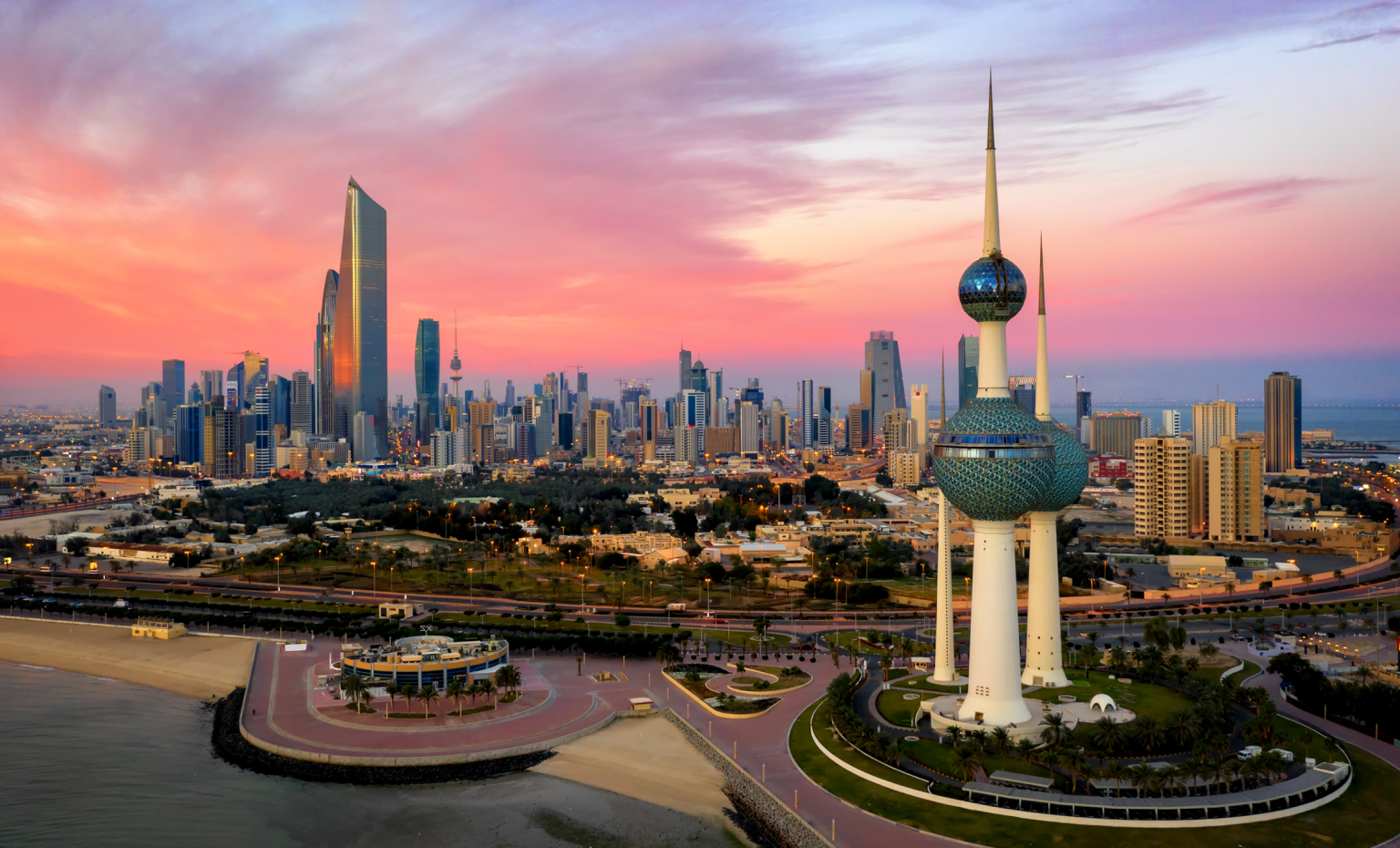
- Kuwait Towers: The iconic three towers overlooking the Gulf, a symbol of modern Kuwait.
- The Avenues Mall: One of the largest and most luxurious shopping malls in the Middle East.
- Sheikh Jaber Al-Ahmad Cultural Centre: Known as the “Opera House,” an architectural masterpiece and cultural hub.
- Al Hamra Tower: The tallest carved concrete skyscraper in the world.
- Souq Al-Mubarakiya: One of the oldest traditional markets, surviving the Gulf War and still thriving today.
🧳 Tourism & Experiences
- Offshore Exploration: Boat trips to Failaka Island to see ancient Greek ruins and Gulf War remnants.
- Desert Camping: A popular winter tradition (Nov–Mar) involving luxury tents and traditional stargazing.
- Cultural Immersion: Visiting the Tareq Rajab Museum for its world-class collection of Islamic arts and jewelry.
- National & Liberation Days (Feb 25-26): Experiencing the massive parades and fireworks that transform the capital.
🧭 Traveler Essentials (Dec 28, 2025)
- Entry & Visas: A new e-Visa system launched in July 2025, simplifying entry for tourists from over 50 countries. Tourist visas are generally valid for 90 days.
- Connectivity: High-speed 5G is ubiquitous. A Visa study in March 2025 highlighted that 94% of Kuwaiti consumers now use secure digital payments, making the country almost entirely cashless for travelers.
- Transport: No railway system yet; taxis are the main transport. Use apps like Uber or Careem.
- Safety: Very high. However, travelers in the desert should beware of unexploded ordnance near the Iraq border.
- Language: While Arabic is official, English is spoken fluently by almost everyone in service and business sectors.
📊 Summary Data (2025)
| Indicator | Value |
| GDP Growth (2025) | 2.6% |
| Population | ≈ 5.03 Million |
| GDP per Capita (PPP) | ≈ $53,000 |
| Inflation (Aug 2025) | 2.4% |
| Literacy Rate | 97.8% |
| Public Debt/GDP | ≈ 3.2% (Lowest in the GCC) |