📍 Key Information
- Official Name: Sultanate of Oman (Salṭanat ʻUmān)
- Capital: Muscat
- Largest City: Muscat
- Area: 309,500 km²
- Population: ≈ 5.5 million (Dec 2025 estimate)
- Official Language: Arabic (English is widely used in business)
- Currency: Omani Rial (OMR) — One of the world’s most valuable currencies.
- Time Zone: GST (UTC +4)
- Political System: Absolute monarchy
- Leader: Sultan Haitham bin Tarik (Since January 2020)
📜 History
- Maritime Empire: Historically a major maritime power with an empire reaching as far as Zanzibar and parts of modern-day Pakistan.
- Qaboos Era (1970–2020): Sultan Qaboos bin Said transformed Oman from an isolated state into a modern, unified nation known for its “neutral diplomacy.”
- Succession: Sultan Haitham bin Tarik ascended in 2020, focusing on fiscal discipline and the Vision 2040 economic blueprint.
- 2025 Diplomacy: Oman remains a critical regional mediator. In December 2025, Muscat hosted the successful negotiation for the exchange of prisoners in Yemen.
- Current Event (Dec 26–28, 2025): Oman joined several Arab and Islamic nations in formally rejecting Israel’s recognition of Somaliland, citing concerns over regional stability in the Red Sea and Horn of Africa.
🗺️ Geography
- The Gateway to the Gulf: Strategically located at the mouth of the Persian Gulf, controlling the Musandam Peninsula and the Strait of Hormuz.
- Topography: Diverse landscapes including the rugged Al Hajar Mountains, the green monsoon-fed hills of Salalah (Dhofar), and the vast sands of the Sharqiya.
- Climate: Arid and hot for most of the year; however, the south (Dhofar) experiences the Khareef (monsoon) from June to September, turning the desert lush and green.
👥 People & Society
- Ethnic Groups: Primarily Arab, with significant historical influences and minorities from East Africa, Balochistan, and South Asia.
- Religion: Majority Muslim, with a unique and dominant Ibadhi community, known for its tolerance and moderate approach.
- Vision 2040 Progress: As of late 2025, over 74% of performance indicators for Vision 2040 show substantial progress, particularly in digital transformation and social protection.
- Social Values: Deeply rooted in tradition, modesty, and hospitality. Omani society is often described as the most polite and welcoming in the GCC.
🎭 Culture & Heritage
- Aromatic Heritage: Known as the “Land of Frankincense”; frankincense has been harvested in Dhofar for millennia.
- Traditional Arts: The Khanjar (curved dagger) is the national symbol. Traditional music and dancing (like the Razha) are vital to local celebrations.
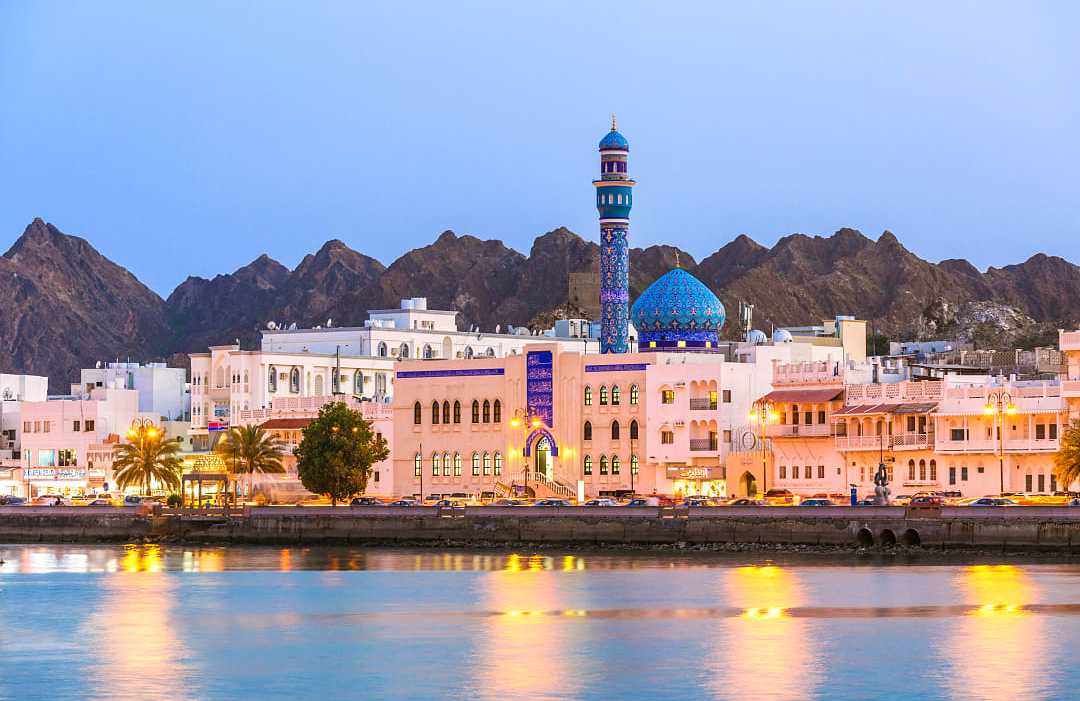
- Architecture: Unlike its neighbors, Oman avoids skyscrapers, preferring a “Modern Omani” style with white or cream-colored buildings and traditional arches.
- Sultan Haitham City: A landmark urban development project covering 14.8 million m² is currently under construction to accommodate 100,000 residents.
💼 Economy (2025)
- Status: Moving toward “Investment Grade” stability. The World Bank and IMF project a real GDP growth of 2.9% to 3.1% for 2025.
- Debt Reduction: Public debt has plummeted from 68% of GDP in 2020 to an estimated 34% in 2024–2025, enhancing fiscal resilience.
- Diversification: Major focus on Green Hydrogen (through the company “Hydrom”) and logistics. The Hafit Rail project (linking Sohar to Abu Dhabi) is a 2025 priority.
- Trade Update: India’s PM Modi visited Muscat in December 2025 to finalize the CEPA (Comprehensive Economic Partnership Agreement), set to boost non-oil trade.
✨ Highlights
- Mutrah Corniche (Muscat): A historic harbor area with a vibrant traditional souq and beautiful waterfront views.
- Jabal Akhdar: The “Green Mountain,” famous for its terrace farming, roses, and cool mountain air.
- Wadi Shab: A spectacular river canyon featuring turquoise pools and a hidden waterfall cave.
- Nizwa Fort: The 17th-century castle and heart of Oman’s interior history.
- The Empty Quarter: Massive, rolling sand dunes that offer a true wilderness experience.
🧳 Tourism & Experiences
- Watching the sunrise over the 300-meter-high dunes of Wahiba Sands.
- Snorkeling with turtles and whale sharks at the Daymaniyat Islands.
- Witnessing the Khareef in Salalah, where the desert turns into a misty tropical forest.
- Exploring the thousands of beehive tombs at Al Ayn and Bat (UNESCO).
🧭 Traveler Essentials (Dec 28, 2025)
- Entry & Visas: Many nationalities (over 100) are visa-free for up to 14 days. Longer stays require an easy e-Visa.
- Currency: OMR; cash is used in markets, but cards/Apple Pay are standard in cities.
- Connectivity: High-speed 5G is widely available; Omantel and Ooredoo offer easy tourist SIMs.
- Transport: Hiring a car (preferably 4WD) is the best way to see the country. Taxis in Muscat are best booked via the Otaxi app.
- Safety: One of the safest countries in the world with virtually zero crime against tourists.
- Language: English is the lingua franca for tourism and business.
📊 Summary Data (2025)
| Indicator | Value |
| GDP Growth (2025) | ≈ 3.1% |
| Population | ≈ 5.5 Million |
| Inflation | 0.9% (Exceptionally low) |
| Public Debt/GDP | ≈ 34% |
| Literacy Rate | ≈ 96% |
| HDI | 0.858 (Very High) |